
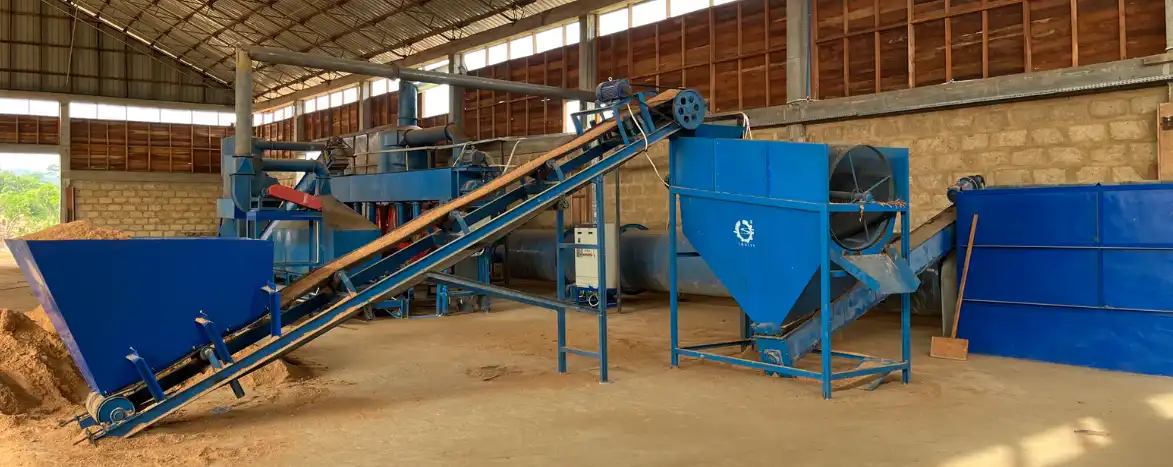
Charcoal Machine Knowledge: The Complete Guide to Types, Working Principles, Selection, and Market Trends
Introduction
The global charcoal market is projected to expand from 73.26 million tons in 2025 to 93.39 million tons by 2031, registering a CAGR of 4.13% during the forecast period. Behind this growth lies a quiet technological revolution: modern charcoal machines have transformed what was once a slow, smoky, and inefficient traditional craft into a precise, automated, and environmentally responsible industrial process.
Whether you are an entrepreneur exploring biomass recycling opportunities, a farmer seeking to convert agricultural waste into value-added products, or an investor evaluating charcoal production equipment, understanding the fundamentals of charcoal machines is essential. This comprehensive guide covers everything from core working principles to machine types, selection criteria, operational best practices, and emerging market trends.
What Is a Charcoal Machine?
A charcoal machine—also known as a charcoal making machine, carbonization machine, or biomass charcoal equipment—is a device designed to convert organic materials into charcoal through a controlled thermal process. The machine heats biomass materials in a low-oxygen environment, removing moisture and volatile components while leaving behind carbon-rich charcoal.
These machines can process a wide range of raw materials, including wood, bamboo, sawdust, rice husks, coconut shells, palm shells, and various other agricultural and forestry wastes. The resulting charcoal serves multiple purposes: fuel for cooking and heating, raw material for activated carbon production, industrial fuel, and even soil amendment in the form of biochar.
The Core Working Principle: Pyrolysis and Carbonization
At the heart of every charcoal machine lies a process called pyrolysis or carbonization. Pyrolysis involves the thermal decomposition of organic material at elevated temperatures in the complete or near-complete absence of oxygen. Without oxygen, the material cannot combust; instead, it breaks down chemically, releasing volatile compounds and leaving behind a carbon-rich solid residue.
Key Process Stages
1. Drying and Preheating
Raw biomass typically contains significant moisture. Before carbonization can proceed efficiently, the material must be dried. For most feedstocks, the moisture content needs to be reduced to below 12% to enhance carbonization efficiency. Some advanced machines incorporate integrated drying systems that handle this step automatically.
2. Carbonization
Once dried, the biomass enters the carbonization chamber, where it is heated to temperatures typically ranging from 300°C to 600°C. At these temperatures, volatile organic compounds are driven off, and the carbon structure of the biomass is fixed. Research indicates that carbonization temperature (300–750°C) and feedstock type are the primary factors determining biochar yield and quality, while holding time exerts a comparatively minor influence.
3. Cooling and Discharge
After carbonization, the charcoal must be cooled in an oxygen-free environment to prevent spontaneous combustion. Modern continuous systems manage this through sealed cooling chambers, while batch systems allow the material to cool naturally within the sealed kiln.
4. Exhaust Gas Treatment
Environmentally responsible charcoal machines incorporate exhaust gas purification systems. These systems capture and treat the volatile gases and tar produced during carbonization, converting them into usable fuel or processing them to meet emission standards.
Main Types of Charcoal Machines
Charcoal machines come in several configurations, each suited to different production scales and operational requirements.
Batch-Type Machines
Batch-type machines are ideal for small-scale operations. They are simple to operate, require limited space, and are comparatively more affordable than other types. These machines are loaded, operated, and emptied in discrete batches, making them well-suited for household industries or small workshops. A typical batch cycle for traditional kilns can take up to three weeks, though improved designs have significantly shortened this timeline.
Continuous-Type Machines
Continuous-type machines are favored by large-scale industries because they facilitate uninterrupted production. Raw materials are continuously fed into the system, and finished charcoal is discharged without interruption. This type is suitable for businesses seeking high productivity and efficiency. Continuous systems typically offer better thermal efficiency, higher charcoal yield rates, and more consistent product quality compared to batch operations.
Mobile-Type Machines
Mobile charcoal machines offer flexibility and are suitable for location-specific operations, such as at forests or plantations where they can be moved directly to the source of raw materials. While they provide logistical convenience, mobile units may compromise on production scale compared to stationary systems.
Innovative Designs: The Double-Cylinder Reactor
Some advanced models employ a dual-cylinder reactor design, where the inner cylinder pre-dries the material while the outer cylinder ensures deep carbonization. This staged carbonization approach improves thermal efficiency. Such systems may also feature automatic tar and dust cleaning mechanisms, triple-seal safety designs, and nitrogen displacement to prevent flash explosions.
Applications of Charcoal Products
The charcoal produced by modern machines serves diverse markets:
Fuel Applications: The most common use of charcoal remains as a fuel for outdoor cooking, grilling, and barbecue. Coconut shell charcoal, in particular, is prized for its high fixed carbon content, low ash, and smokeless burn—making it ideal for barbecuing, grilling, and shisha applications. The global charcoal market’s barbecue and outdoor grilling segment continues to expand as premiumization trends take hold in developed markets.
Industrial Applications: Charcoal serves as a metallurgical fuel and as a substitute for coke in iron, steel, and cement production. Its use in water and air purification through activated carbon is another major industrial application. Following the U.S. Environmental Protection Agency’s PFAS limits, municipal water filtration has increasingly relied on coconut-shell activated carbon.
Agricultural Applications: Biochar—a form of charcoal produced specifically for soil amendment—enhances soil health, improves nutrient retention, and contributes to carbon sequestration. Long-term field studies have shown that biochar can deliver lasting benefits for food security and climate mitigation, with cumulative productivity boosts exceeding 20% after six seasons in nutrient-poor soils.
Specialty Products: Charcoal can be further processed into incense, mosquito coils, explosives, and even cosmetics, expanding its commercial reach well beyond traditional fuel markets.
How to Choose the Right Charcoal Machine
Selecting the appropriate charcoal machine requires careful evaluation of multiple factors. Here are the key criteria:
Production Capacity and Scale
Match the machine’s capacity to your actual raw material availability and target output. Small machines are suitable for startups, farms, and small charcoal producers, while larger or continuous systems are designed for commercial production. When selecting capacity, consider daily raw material availability and target charcoal output rather than simply choosing the largest machine available.
Raw Material Characteristics
Different machines are optimized for different feedstocks. The moisture content, fiber content, and particle size of your raw material will influence the choice of pre-processing equipment and carbonization technology. Buyers should inform suppliers about their raw material type, moisture level, available quantity, and desired charcoal output to ensure proper machine configuration.
Heating Source and Energy Efficiency
Charcoal machines may use electric heating, gas, biomass combustion, or a combination of these. Evaluating the energy consumption and available local energy sources is critical to operating costs. Modern machines often incorporate syngas recycling systems that use the gases produced during carbonization to fuel the heating process itself, significantly reducing external energy requirements.
Environmental Compliance
Choose equipment equipped with proper exhaust gas treatment systems. Look for machines that include secondary combustion, spray/activated carbon filtration, or other emission control mechanisms to ensure compliance with local environmental regulations.
Build Quality and Materials
High-quality charcoal machines use specific materials suited to different operating conditions. For high-temperature furnaces, carbon felt or graphite felt is typically used for insulation, while biomass or low-temperature furnaces may use ceramic fiber. Heating elements vary by temperature range: resistance wire for low-temperature (<700°C) furnaces, silicon carbide rods for medium-temperature applications, and graphite for high-temperature (>1000°C) furnaces.
Investment and ROI Considerations
Capital Investment Range
The total investment for a charcoal production facility varies widely based on scale and configuration:
- Small-to-mid carbonization setup: $10,000–$80,000
- Larger continuous systems with better emission control: $100,000–$500,000+
- Small starter plant (complete): $40,000–$150,000
- Medium operation: $150,000–$500,000
- Industrial plant: $500,000–$2 million+
Return on Investment
A well-planned charcoal machine project can achieve an attractive ROI, with cost recovery typically possible within 1 to 3 years. Key factors affecting payback period include:
- Raw material cost and logistics: This is the single most important variable. Free or cheap feedstock located on-site leads to the fastest ROI.
- Machine efficiency and yield: High-quality continuous pyrolysis machines have better thermal efficiency and higher charcoal yield rates (often 30–35% of dry input).
- By-product utilization: Syngas recycling can cut energy costs by 60–70%, while selling pyrolysis oil adds a valuable revenue stream.
- Product market and price: Premium markets such as BBQ and activated carbon pay significantly more than industrial fuel markets.
Annual maintenance costs for carbonization furnaces are relatively modest, typically ranging from $700 to $1,100 for standard equipment.
Operational Best Practices and Troubleshooting
Pre-Start Setup
Proper installation is critical to long-term performance. Place the machine on a level concrete floor rated for dynamic load and bolt the base frame securely. Vibration is the enemy of consistent briquette density and will loosen anchor bolts within days if the foundation flexes. Check phase sequence before the first start, as a reversed phase can destroy the die within seconds.
Warm-Up and Feeding
Start the main motor with the hopper gate closed and let it run unloaded for 2–3 minutes, listening for any abnormal knocking or grinding sounds. Then open the gate partially and feed dry, low-value material at 50–70% feed rate for 10–15 minutes before gradually increasing to full production.
Common Problems and Solutions
Loose or easily broken briquettes: This is typically caused by insufficient briquetting pressure (below 15 MPa), excessively low moisture content (below 8%), or insufficient fiber content. Adjust pressure to 15–25 MPa, maintain moisture at 8%–15%, and optimize the blending ratio with high-fiber materials.
Sticking and clogging in the extruder: Often caused by excessively high moisture content (above 15%) or excessive frictional heat (above 220°C). Reduce moisture, adjust machine speed to control temperature between 160–200°C, and regularly clean residual material from the mold.
Rough or cracked surface of rods: This stems from worn molds, uneven sawdust particle size, or incomplete removal of impurities. Replace worn molds with alloy steel versions, re-screen the sawdust for uniform particle size, and increase pressure if cracks are longitudinal.
Decreased capacity: Check motor power, worn screw shafts, and feeding uniformity. For small briquetting machines, motor power should not be less than 15 kW.
Market Trends and Future Outlook
Biochar Market Growth
The global biochar market was valued at approximately $819.5 million in 2025 and is projected to reach $2.03 billion by 2032, growing at a CAGR of 13.86%. In terms of volume, the market is estimated at 0.88 million tons in 2026, growing from 0.71 million tons in 2025, with projections reaching 2.59 million tons by 2031 at a 24.11% CAGR.
Policy Drivers
Government incentives are accelerating adoption. The U.S. Inflation Reduction Act broadened Section 45Q and 45V tax credits to include carbon utilization pathways, allowing qualified biochar facilities to claim monetizable certificates. In Europe, the Carbon Removal Certification Framework is drafting biochar-specific quantification rules that should standardize permanence proofs and attract institutional capital. These policy developments are significantly improving project economics and reducing investment risk.
Technology Trends
Several technological directions are shaping the future of charcoal machines:
- Microwave-assisted pyrolysis leverages rapid microwave heating to significantly improve reaction efficiency.
- Hydrothermal carbonization operates at lower temperatures and is particularly suitable for high-moisture biomass, greatly expanding the range of usable feedstocks.
- Co-pyrolysis blends multiple feedstocks to exploit synergistic effects and optimize product performance.
- Automated control systems with real-time monitoring of temperature, pressure, and feed rate are becoming standard on higher-end equipment.
Challenges Ahead
Unit economics remain challenging due to feedstock, preprocessing, and thermal conversion costs. Academic cost curves place fully loaded production between $106 and $170 per ton depending on moisture content, plant scale, and regional energy tariffs. Low bulk density also inflates per-ton freight costs on long-haul routes, prompting producers to adopt either mobile pyrolysis units that follow feedstock sources or rail-linked hub models.
Conclusion
Charcoal machines represent a critical intersection of waste management, renewable energy, and sustainable agriculture. From small batch units serving local communities to industrial-scale continuous systems producing thousands of tons annually, these machines transform low-value biomass residues into valuable carbon products with applications spanning fuel, filtration, agriculture, and beyond.
As carbon markets mature and environmental regulations tighten, the charcoal machine industry is poised for continued innovation and growth. For prospective buyers and operators, success hinges on understanding the fundamental technology, carefully matching equipment to specific needs, and staying informed about evolving market dynamics and policy incentives. Whether your goal is reducing agricultural waste, producing clean-burning fuel, or contributing to global carbon sequestration efforts, the right charcoal machine—properly selected, operated, and maintained—can be a sound investment in a more sustainable future.