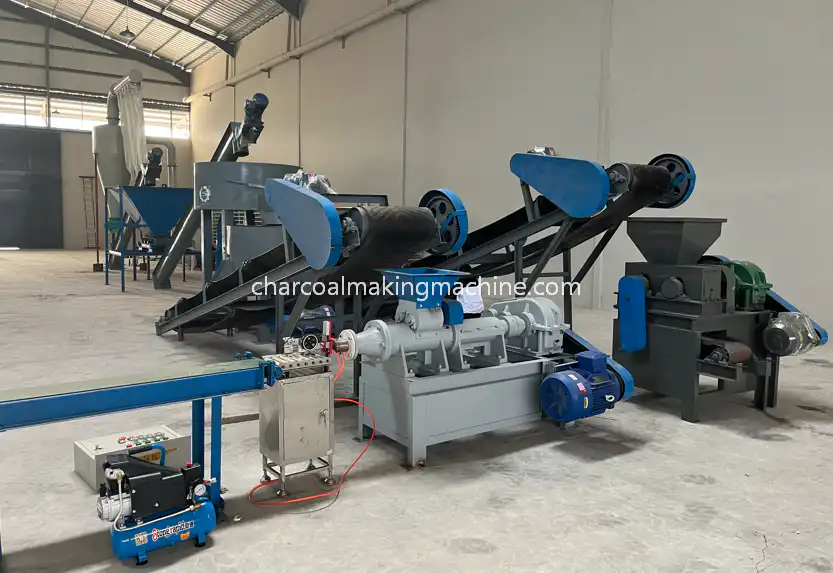
Charcoal Briquette Production Line
Brief Introduction
The charcoal briquette production line carbonizes biomass raw materials, then crushes, mixes with binders, briquettes, and dries them to transform charcoal powder into formed fuels. It produces charcoal briquettes, BBQ charcoal, hookah charcoal, and other solid briquette products. This process improves the utilization rate of charcoal powder, enhances combustion performance, reduces pollution, and meets diverse customer needs.
Suitable raw material
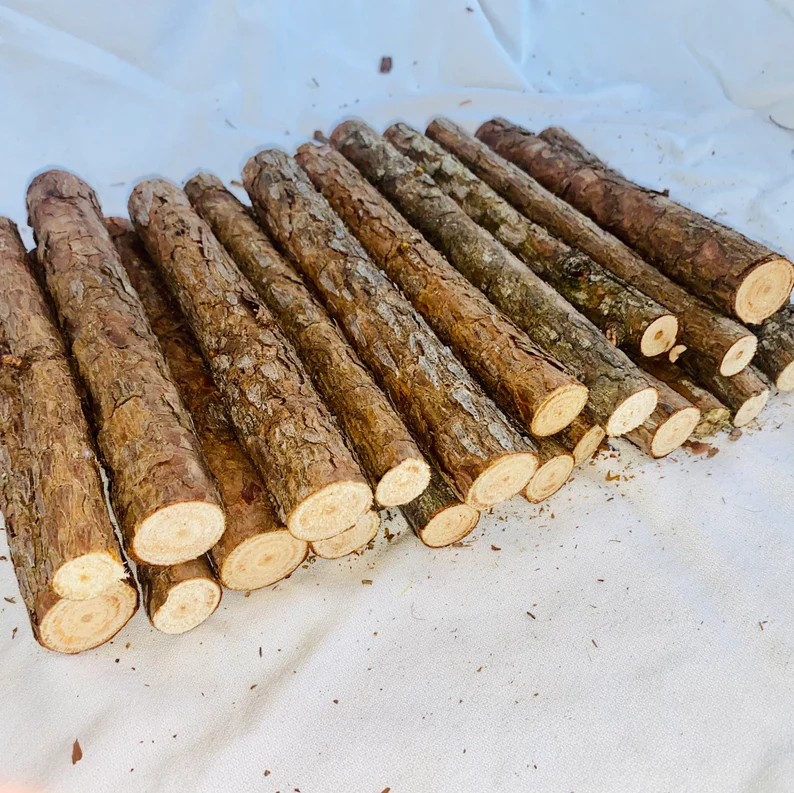
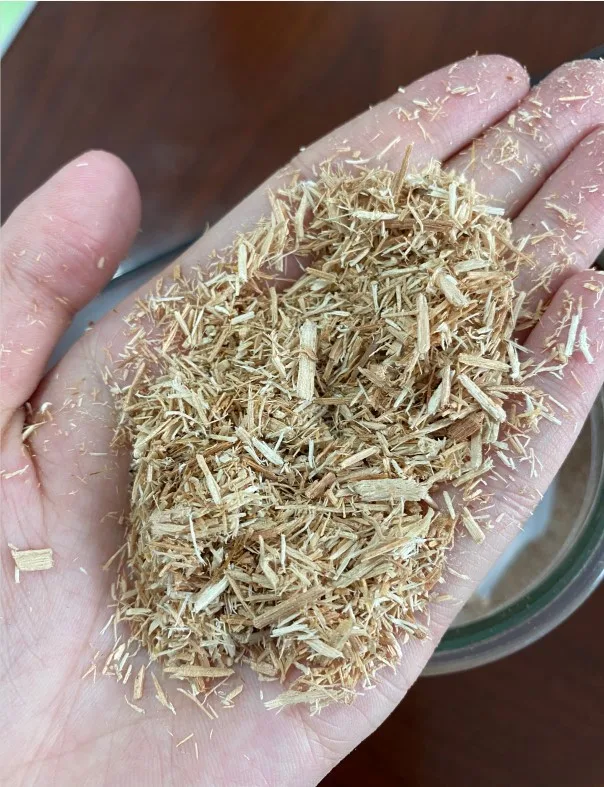
Forestry residues: logs, sawdust, wood chips, bamboo
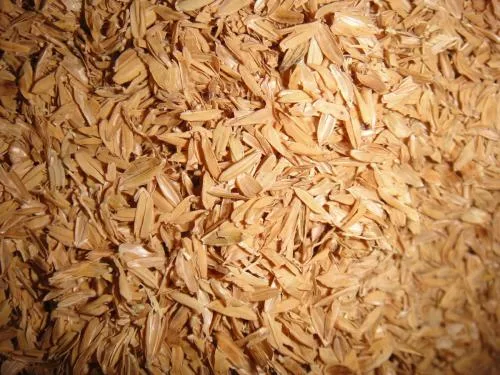
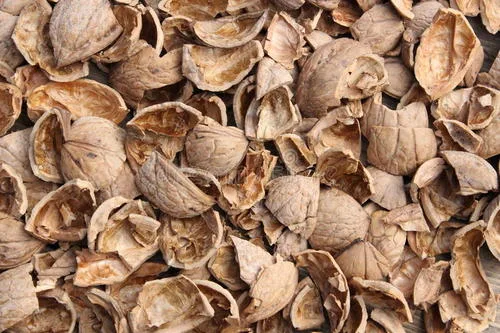
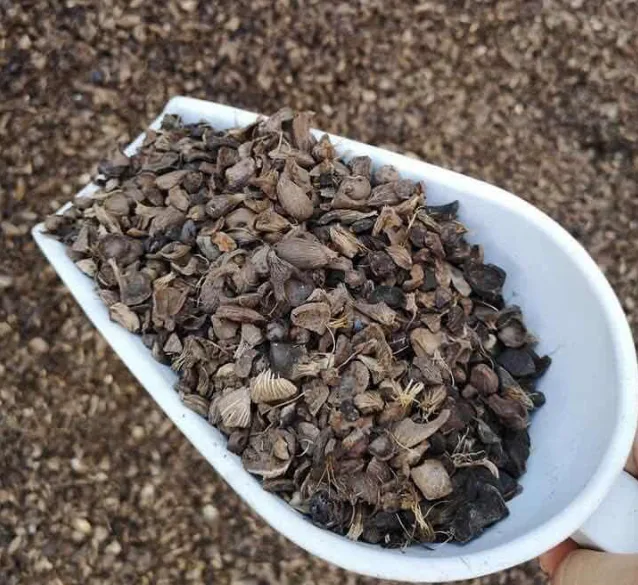
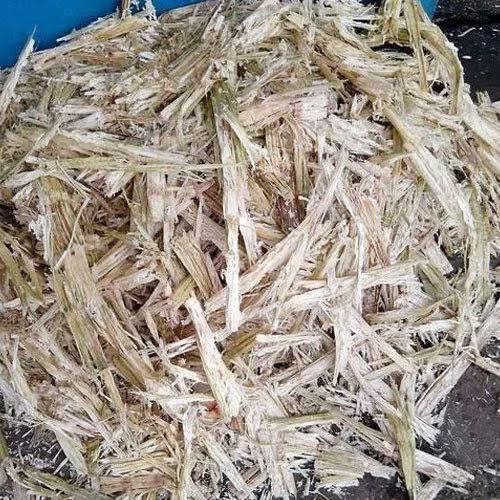
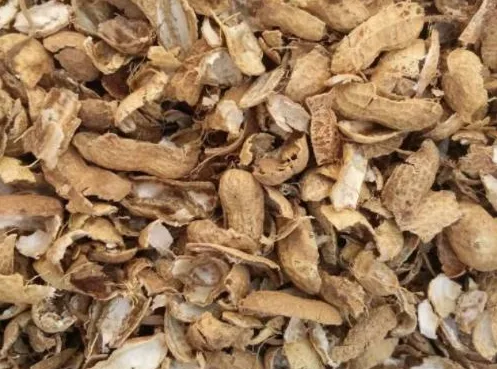
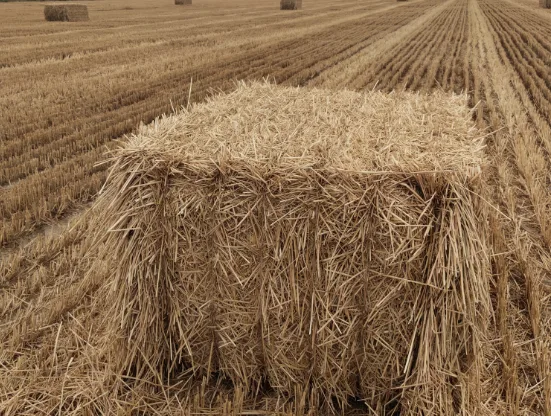
Agricultural waste (shells): coconut shells, palm shells, peanut shells, straw, rice husks
Production process & Key machines & Functions
The charcoal briquette production line consists of six main steps: carbonization, crushing, mixing, rolling, material distribution, and molding.
1.Carbonization
This step involves the carbonization of biomass feedstock in a carbonization furnace. Customers can choose different types of carbonization furnaces, such as continuous carbonization furnaces and horizontal carbonization furnaces, depending on the different feedstocks and production volumes.
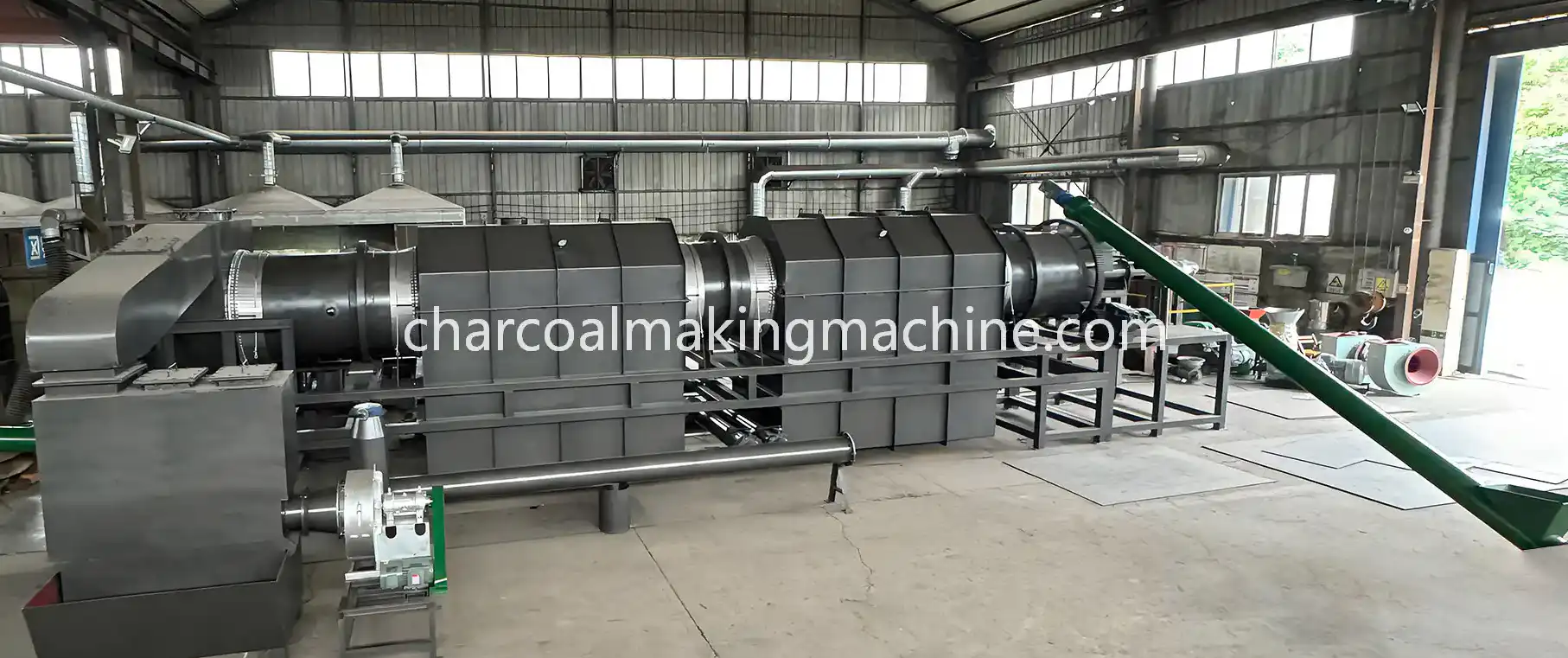
- Continuous carbonization furnace: Continuous carbonization furnaces are machines that operate continuously, making them suitable for customers with large charcoal production volumes. They are primarily suitable for plant husks with a diameter of less than 3cm, such as rice husks, peanut shells, wood chips, palm shells, etc.
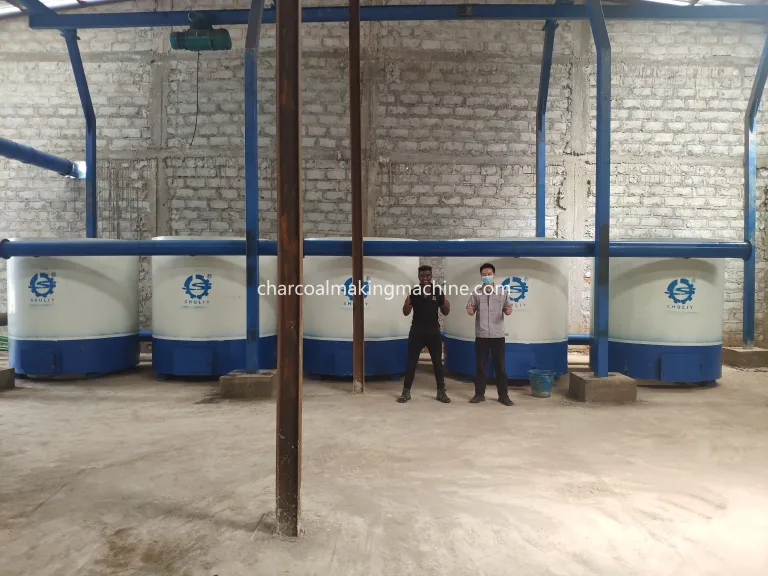
- Horizontal carbonization furnace: Horizontal carbonization furnace are designed for batch production. They are primarily suitable for raw materials such as logs, coconut shells and branches.
2.crushing
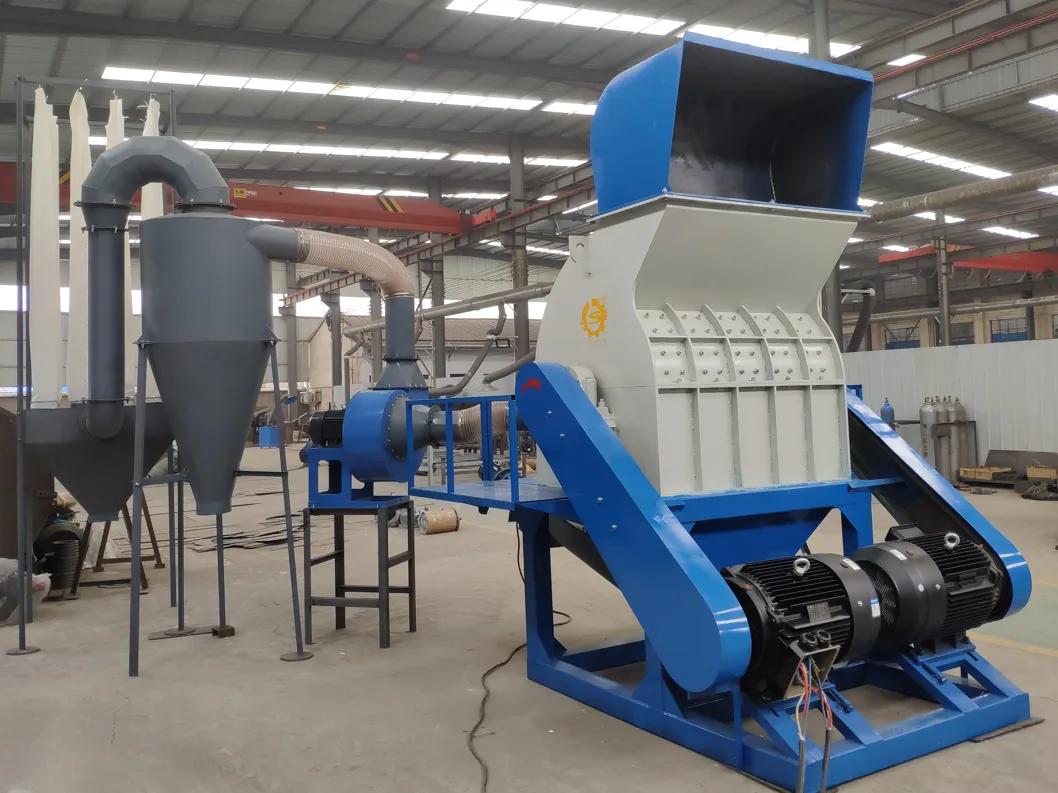
The second step is crushing. To facilitate shaping, the charcoal blocks need to be crushed into charcoal powder of 1-6mm.
Working principle of a crusher:
The hammer blades of the crusher will crush the high-speed rotating charcoal blocks inside the machine into charcoal powder. The finished product will be discharged through a screen. Different screens can be configured according to customer needs, usually 2mm or 4mm screens are selected.
3.mixing
The third step primarily increases the density of the charcoal powder. The mixer combines and stirs the charcoal powder and the additives.
4.rolling
The fourth step involves mixing and grinding the binder, charcoal powder, and water to increase the density of the charcoal powder. The roller mill uses a rear axle reducer to drive two grinding rollers to further grind the charcoal powder, which ensure extremely uniform distribution of moisture and adhesive.
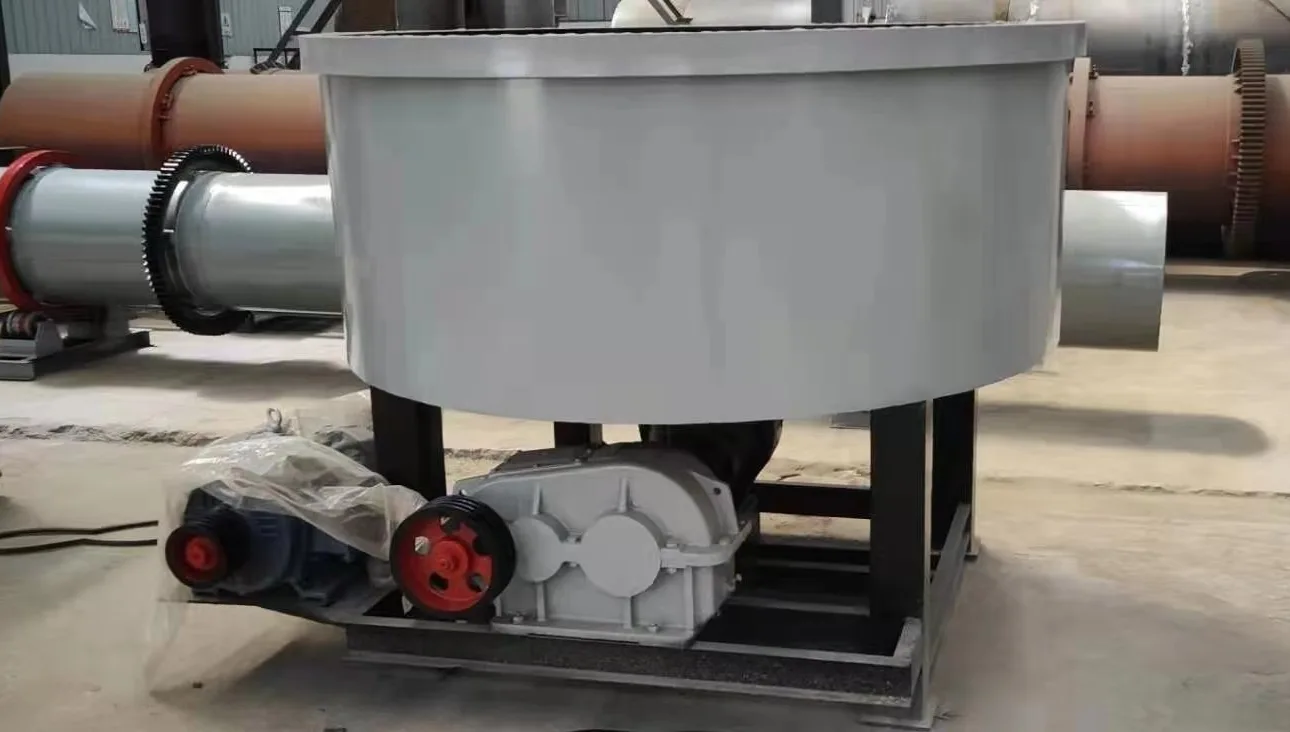
5.material distribution
The fifth step is to distribute the material and ensure continuous operation of the production line.
6.molding
The final step is forming. Based on the type of finished product, molding machines are mainly divided into charcoal briquette extruder, ball charcoal briquette press machine and stainless steel shisha charcoal tablet press machine.
Charcoal briquette extruder:
Working principle: The charcoal briquette extruder is powered by an electric motor, which drives a reducer via a V-belt. The reducer then transmits the power to the main shaft. The spiral structure inside the main shaft is responsible for extruding and conveying the charcoal powder forward, pushing it to the die for extrusion and shaping.
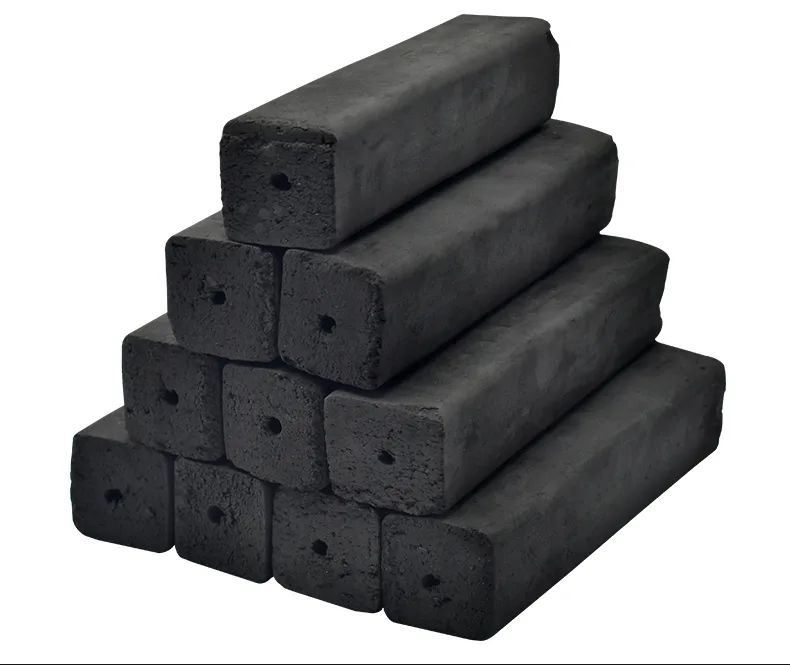
The charcoal briquette extruder can produce charcoal briquette in shapes such as quadrilaterals and hexagons. Customers can choose different molds to change the shape of the charcoal.
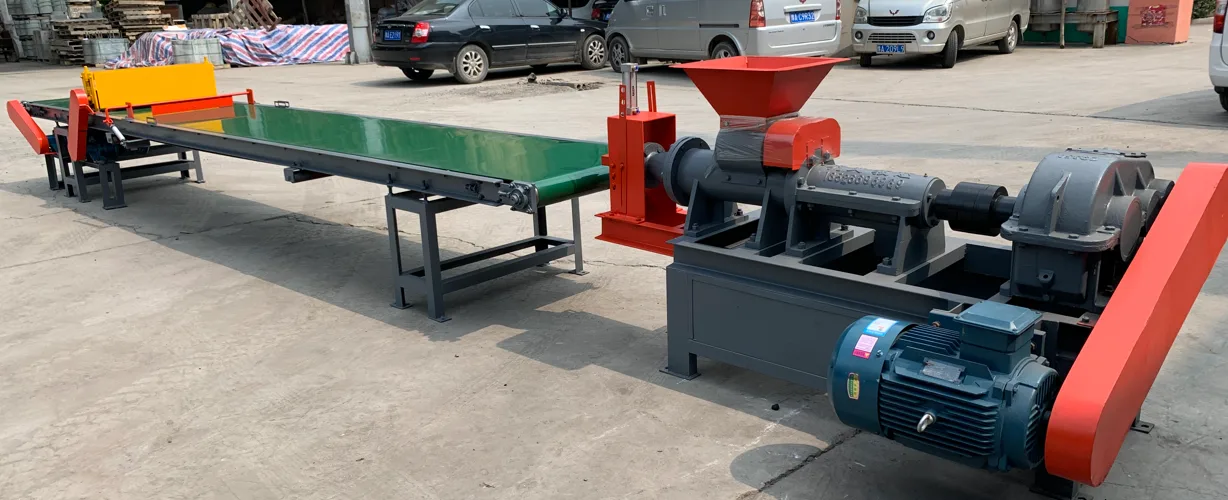
Ball charcoal briquette press machine:
Working principle
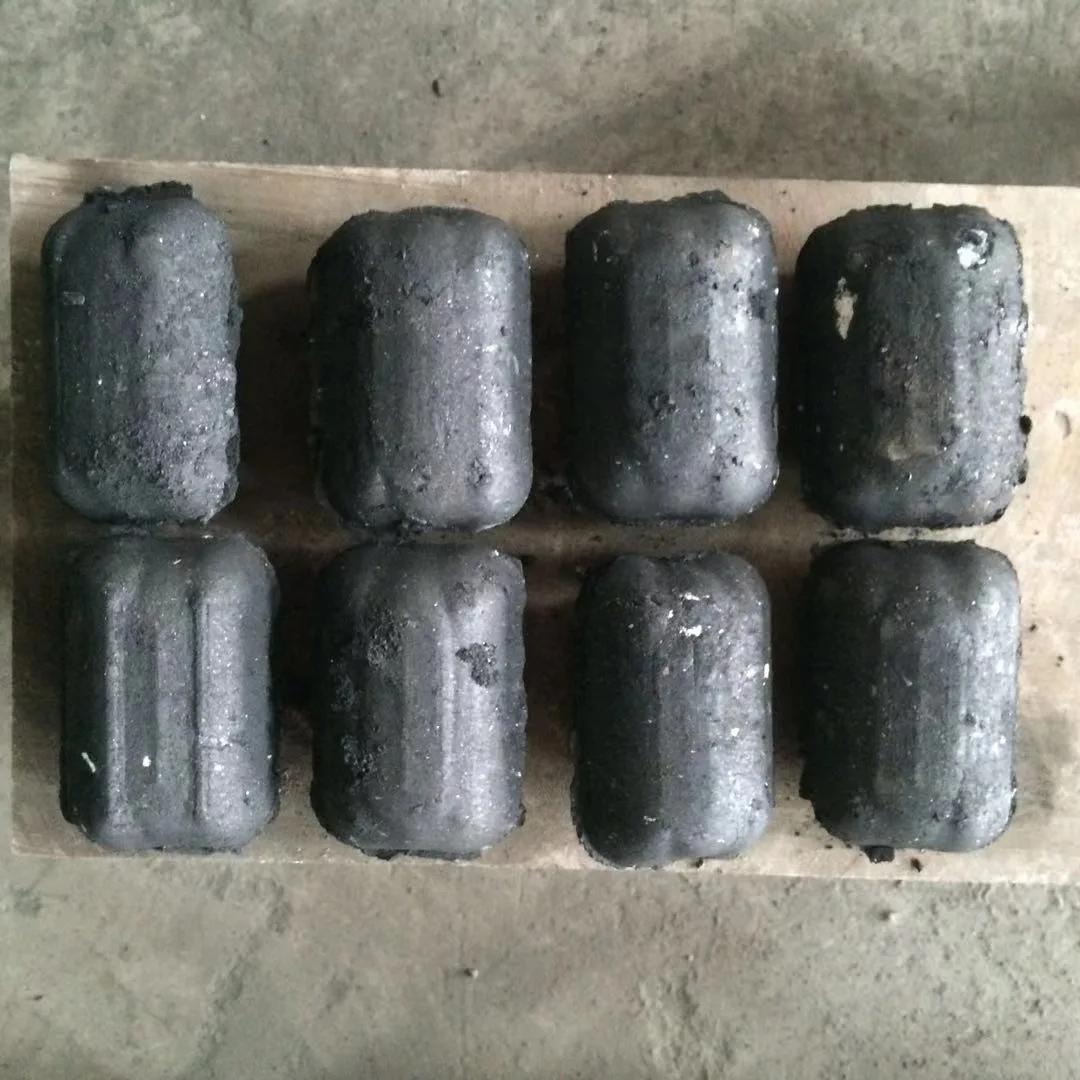
The ball charcoal briquette press machine operates by a motor driving a pair of opposing rotating pressure rollers. Charcoal powder is fed between the rollers, and as the rollers press the material into the hemispherical grooves on their surfaces, the pressure gradually increases, reaching its maximum at the center line of the two rollers, where the material is compressed into briquettes. After passing the center line, the pressure drops sharply, and the briquettes are automatically demolded and formed.
It can produce charcoal of spherical, oval, pillow-shaped, and square shapes.
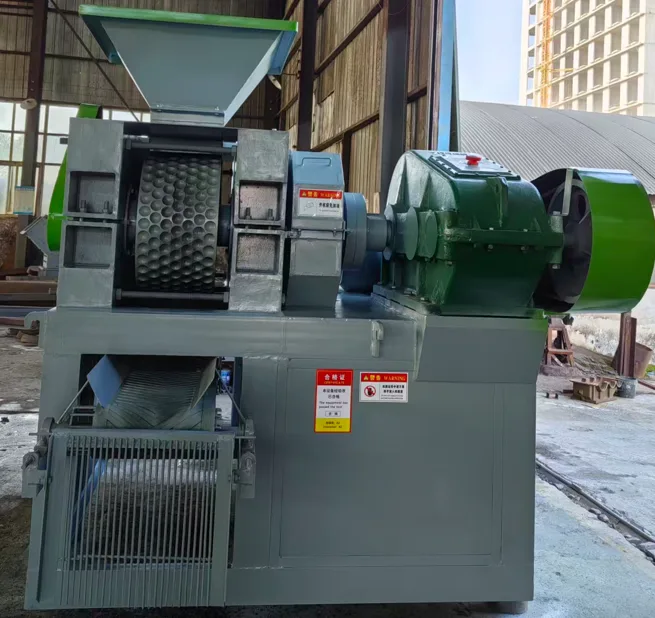
Shisha charcoal tablet press machine:
working principle:
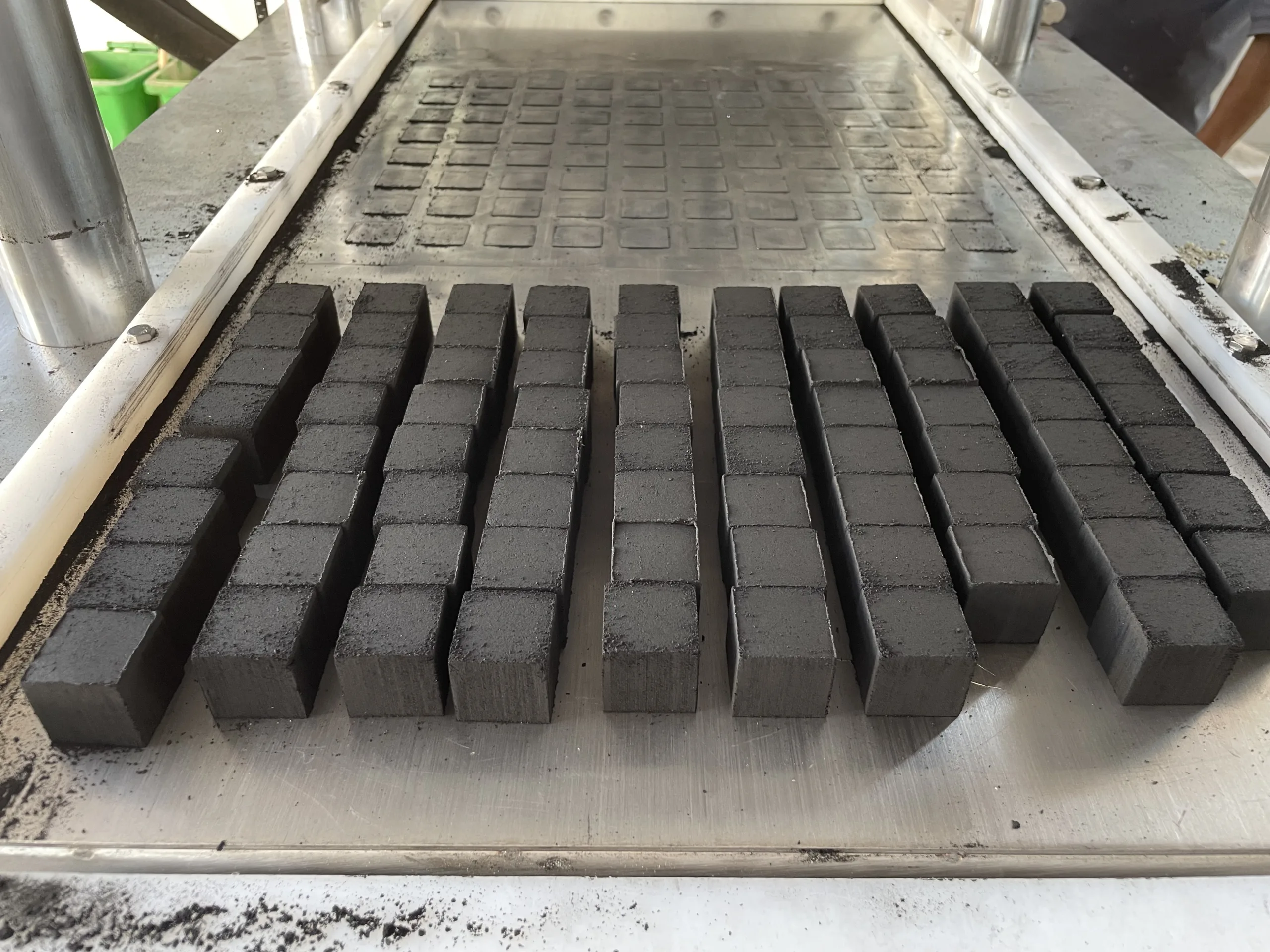
Charcoal powder is fed from the hopper, and the machine automatically fills the lower mold with the powder. After filling, the upper mold, driven by hydraulic pressure, applies tremendous pressure to the charcoal powder in the lower mold hole, ensuring high density and uniform texture of the charcoal sheets. After forming, the lower mold rises to push the charcoal sheets out of the mold, and the finished product is automatically ejected by the machine.
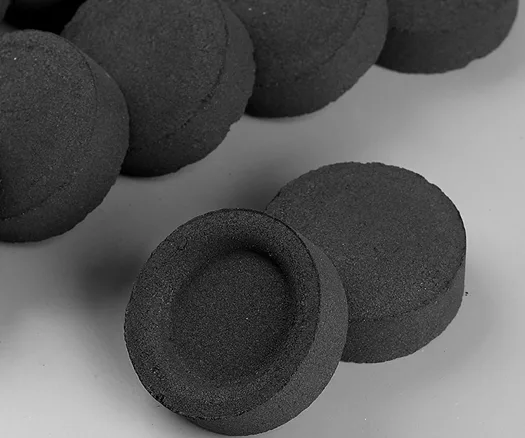
Tablet presses are typically available in two shapes: whole tablets and cubes. Our factory can also customize molds to meet specific customer requirements.
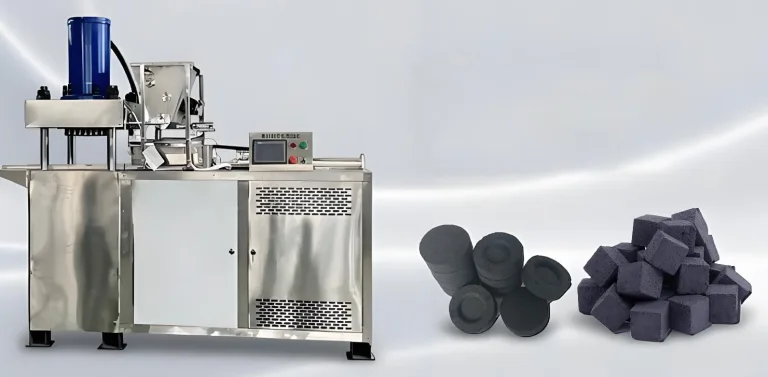
Advantages of Our Stainless Steel Hookah Charcoal Press Machine
- Long service life – The machine is made of stainless steel, so it’s durable and can last up to ten years.
- Better density – It comes with a hydraulic cylinder, which gives the hookah charcoal pieces higher and more consistent density.
- Easy operation with less labor – It’s equipped with a PLC control system. You can run it in fully automatic mode or manual mode, reducing manpower.
- No wear parts – The machine has no wear parts, which means lower maintenance cost and less downtime.
Final products and applications of charcoal briquetting production line
- Shisha Charcoal: Used to heat hookah tobacco. Burns evenly, smokeless and odorless, with stable heat output.
- BBQ Charcoal:suitable for outdoor grilling, restaurant cooking, etc. Ignites quickly and maintains heat for a long time.
- Charcoal Briquettes: Commonly used in household applications such as indoor heating in winter, charcoal hot pot, and household stoves. In the industrial sector, it can be used as boiler fuel to replace coal or heavy oil, as a chemical raw material, or in metal smelting.